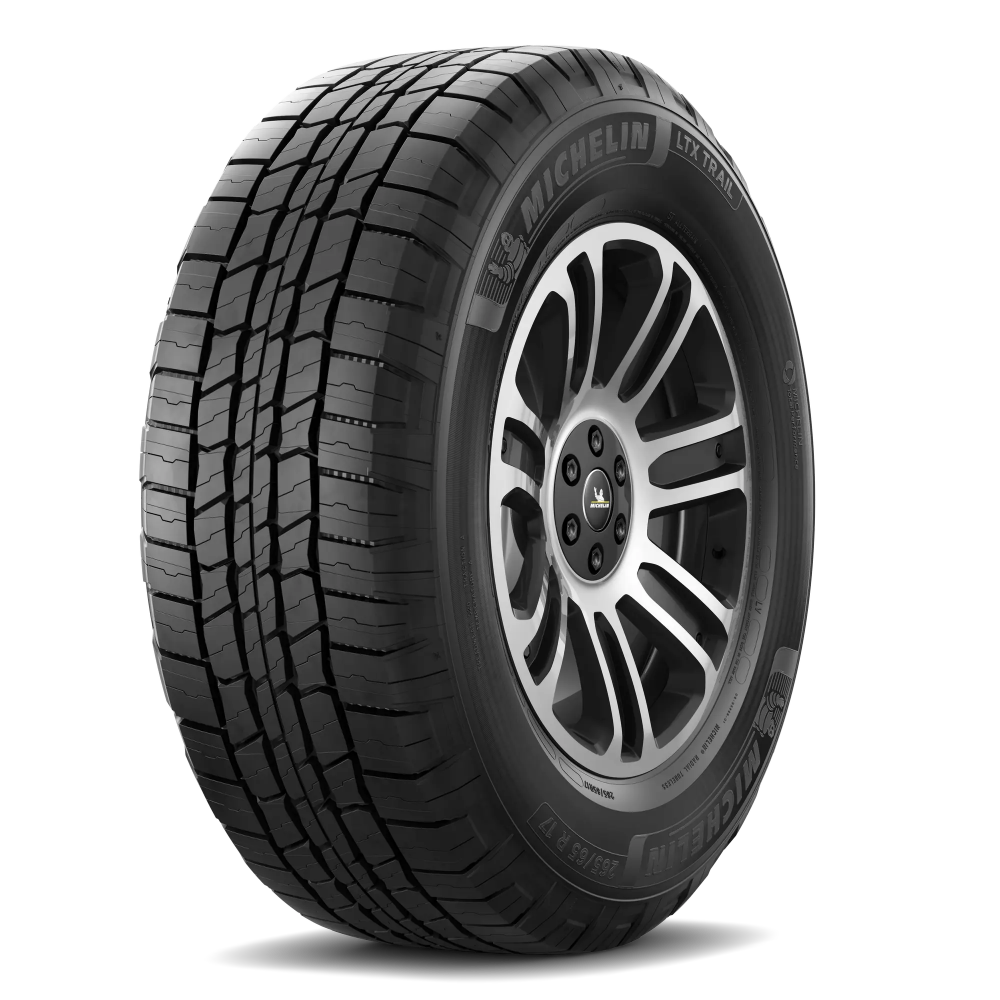
This quick guide breaks down the key information printed on every tyre’s sidewall the details that help you identify, specify, and recommend with confidence.
What to Look For
Every tyre sidewall tells a story. Among the logos and branding, you’ll see a string of letters and numbers — the code that defines that tyre’s size, load, and speed capabilities.
In order, you’ll typically find:
- Width
- Profile
- Tyre Construction
- Rim Size
- Load Index
- Speed Rating
Width
The first number refers to the tyre’s width in millimetres — measured from sidewall to sidewall. Wider tyres generally increase grip and stability, while narrower options can help with fuel efficiency and ride comfort.
Profile
The profile (or aspect ratio) is the height of the sidewall as a percentage of its width. A 55 profile, for example, means the sidewall is 55% of the tyre’s width.
Higher profiles are common on passenger vehicles and SUVs, while lower profiles deliver sharper handling for performance applications.
Construction
Next comes a letter indicating the tyre’s construction. R stands for Radial, the standard for most modern vehicles. Other designations include B (Bias ply) and BB (Bias Belted) for heavier-duty applications.
Rim Size
The following number shows the rim diameter in inches, crucial for correct fitment. A 17-inch rim, for example, must be paired with a tyre that matches that diameter exactly.
Load Index
The load index (a two- or three-digit code) tells you how much weight each tyre can safely carry.
Always make sure replacement tyres meet or exceed the vehicle’s original load rating.
A full reference chart can be found below.
Speed Rating
The final letter is the tyre’s speed rating — the maximum safe speed under load.
Always match or exceed the OE rating to maintain safety and compliance.
See the table below for a complete list of symbols.
Extra Markings and Abbreviations
Beyond the main code, tyres often include extra information that can make all the difference when specifying or selling to customers.
A few common examples include:
- XL – Extra Load
- M+S – Mud and Snow
- RFT – Run Flat Technology
- LRR – Low Rolling Resistance
- N* – Porsche Original Equipment
- MOE – Mercedes Original Equipment
These markings are worth double-checking — especially for performance, OE, or specialist applications.
Technology and Innovation
The tyre industry continues to evolve, and new technology is constantly entering the market.
Here are a few you may come across:
- Bluetooth Tyres – Embedded sensors for live performance and pressure data.
- Run Flat Tyres – Maintain control even after a puncture.
- VF Tyres – Very High Flexion tyres for agricultural performance and reduced soil compaction.
- RFID Tyres – Embedded chips for tracking, maintenance, and data monitoring.
Other Identifiers
You’ll also find additional details printed elsewhere on the tyre:
- Brand and Tread Pattern – Manufacturer and model name.
- Country of Manufacture – Indicated by the TIN code.
- TWI (Tread Wear Indicators) – Marks to show when tread depth is at its limit.
- Manufacturing Date Code – Four digits representing the week and year of production (e.g. 2224 = week 22 of 2024).
Need Help Choosing Tyres?
Talk with our team for clear, practical guidance tailored to your needs.
Contact Us